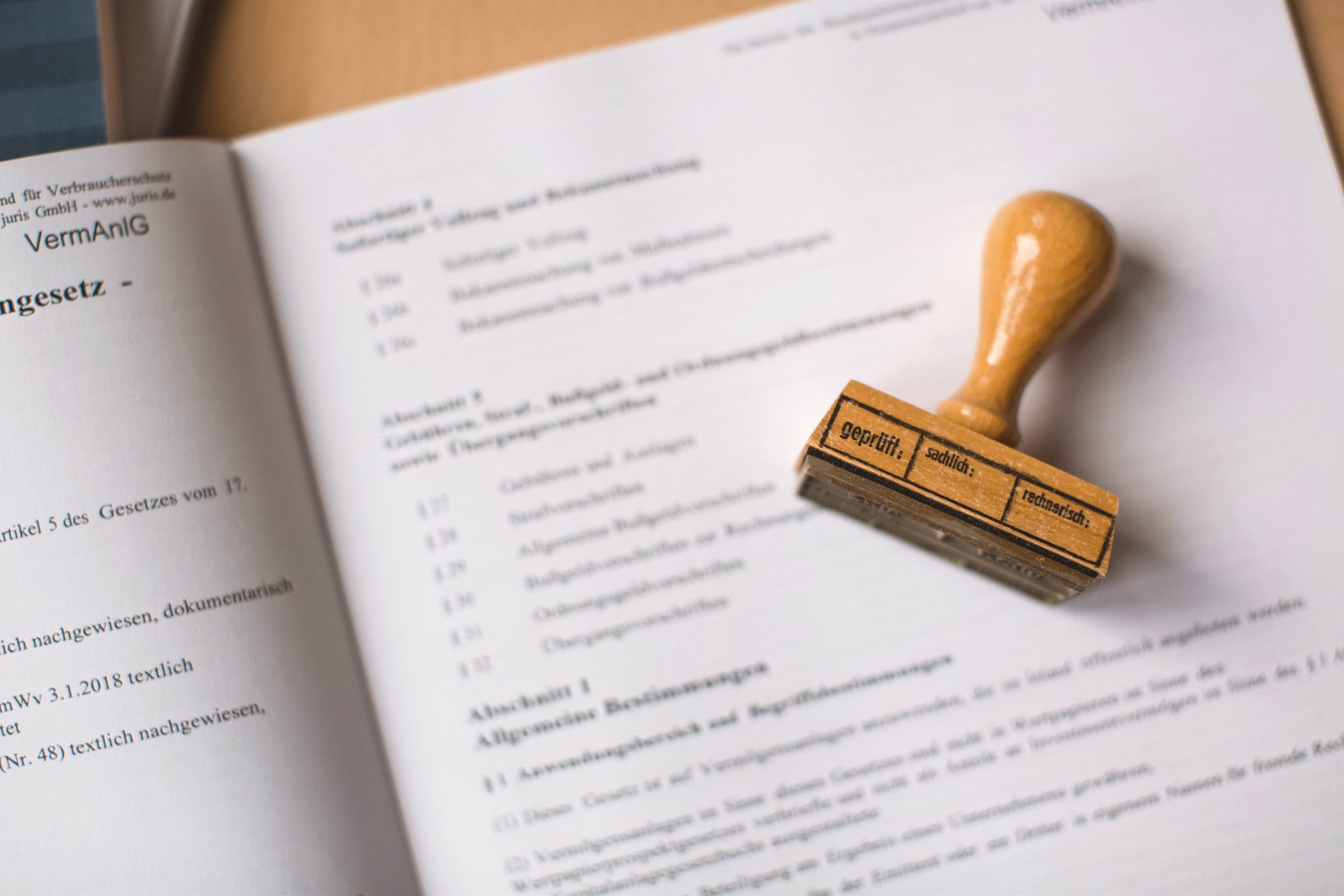
Four processes, four different purposes
When a document crosses a border, the person receiving it faces two problems. They may not be able to read it, and they may have no way of knowing whether it is genuine. The four processes in this guide address those problems in different ways:
- Certified translation deals with language. It produces an accurate version in the reader's language, with a statement from the translator.
- Notarisation involves a notary public verifying signatures, identities or copies, and recording that verification in a formal act.
- An apostille confirms that the signature, seal or stamp on a public document is genuine, for use in another country that is party to the Apostille Convention.
- Legalisation does the same job as an apostille, through a longer chain of authentications, for countries outside the convention.
These can be combined. A Polish court register extract might be translated by a sworn translator, then apostilled; a passport copy might be certified by a notary, whose signature is then apostilled. The order matters, and getting it wrong can mean starting again.
Certified translations
Most payments providers work in English, and many will need translations of documents in other languages. Requirements vary, but the common approaches are:
- Translation by a professional translator with a signed statement that the translation is accurate and complete, along with the translator's name, qualifications and contact details.
- Translation by a sworn or court-appointed translator, a status that exists in many civil law countries, including Poland and much of continental Europe. A sworn translator's stamp carries official weight in their own country.
- Translation certified by a notary, where a notary confirms the translator's identity or the translation itself, depending on local practice.
Some providers can read documents in certain languages themselves and will not need translations, so ask first. Bilingual documents, such as some registry extracts issued in both the local language and English, usually do not need translation at all.
A good translation keeps the layout of the original recognisable, translates stamps and handwritten annotations, and notes anything illegible. It should be attached to a copy of the original, so the analyst can match the two. Machine translations are generally not accepted as formal translations, though they can be useful to give an analyst a quick sense of a document while a proper translation is prepared.
Notarisation
A notary public is a legal officer authorised to perform certain formal acts. What notaries can do, and how much weight their acts carry, differs widely between legal systems. In civil law countries such as Poland and Cyprus, notaries are senior legal professionals whose deeds carry significant evidential weight. In common law countries, notaries often perform a narrower role.
For onboarding, notaries are typically used to:
- Certify copies of identity or corporate documents as true copies of the original.
- Witness signatures on declarations, powers of attorney or ownership confirmations.
- Confirm the identity of the person signing.
- Prepare notarial certificates confirming facts about a company from records they have examined.
Notarisation is one acceptable form of certification for most providers, but it is often more than is needed. A lawyer or accountant's certification is generally sufficient for a payments account. Notarisation becomes necessary when the document will go on to be apostilled, because many competent authorities will only apostille a notary's signature, not a private professional's. Our guide to certified copies covers who else can certify.
Apostilles and the Hague Convention
The Hague Convention of 1961 abolishing the requirement of legalisation for foreign public documents, usually called the Apostille Convention, created a single-step method for authenticating public documents between member countries. More than a hundred countries and territories are now party to it, including many of the jurisdictions seen in international structures. Canada became a party in 2024, which means that older guidance telling Canadian clients they need consular legalisation may now be out of date.
An apostille is a certificate issued by a designated competent authority in the country where the document originated. It confirms:
- The authenticity of the signature on the document.
- The capacity in which the signatory acted, for example as a notary or registrar.
- Where relevant, the identity of the seal or stamp.
An apostille does not verify the content of the document. An apostilled certificate of good standing confirms only that the registrar's signature is real. It says nothing about whether the company is still in good standing on the day you present it.
The competent authority depends on the country. In the United Kingdom, it is the Foreign, Commonwealth and Development Office. Overseas territories such as the BVI and the Cayman Islands designate their own local authorities. In Hong Kong, apostilles are issued through the High Court. Many countries now issue electronic apostilles, which can be verified online through a register maintained by the issuing authority.
Legalisation for non-convention countries
Where either the issuing country or the destination country is not party to the Apostille Convention, documents may need legalisation. The process typically involves a chain:
- The document is notarised or certified locally.
- The foreign ministry, or another designated authority, in the issuing country authenticates the notary's signature.
- The embassy or consulate of the destination country in the issuing country authenticates the foreign ministry's signature.
- In some cases, the destination country's own foreign ministry adds a final authentication.
Legalisation is slower and more expensive than an apostille, and each step has its own timetable. If you need it, start early.
For payments account onboarding, full legalisation is rarely required. It is more often needed for documents used in court proceedings, property transactions, or company registrations in countries outside the convention.
When a payments provider is likely to need each
| Process | Likely needed for onboarding | Typical situation |
|---|---|---|
| Certified translation | Often | Any document not in English, such as a Polish KRS extract or a Greek-language Cyprus certificate |
| Certification of copies | Usually | Passports, proof of address, constitutional documents not supplied as originals |
| Notarisation | Sometimes | Where the provider or a counterparty specifically asks, or as a step before an apostille |
| Apostille | Occasionally | Higher-risk relationships, documents from less familiar jurisdictions, or where the provider's policy requires it |
| Legalisation | Rarely | Documents from or for countries outside the convention |
Always check what the provider needs before paying for an apostille or legalisation. Many applicants spend time and money apostilling documents that the provider would have accepted with ordinary certification.
Getting the order right
When documents need more than one process, sequence matters. A common correct sequence for a foreign-language corporate document that must be apostilled:
- Obtain the original document from the registry.
- Have the registry document apostilled in the issuing country, if the registry's signature can be apostilled directly. Otherwise, have a notary certify a copy, then apostille the notary's signature.
- Have the document and its apostille translated by a certified or sworn translator. Translating the apostille as well avoids a second round.
- If required, have the translator's signature certified or apostilled too.
Translating first and apostilling second can work in some countries, but it can also lead to an apostille being placed on the translation rather than on the document the provider actually wants authenticated. If in doubt, ask the provider which document they want the apostille to cover.
Names, scripts and transliteration
A problem that translation alone does not solve is the spelling of names. A person whose name is written in Greek, Cyrillic, Chinese or Arabic script may find it rendered several different ways across their documents. Their passport uses one transliteration, a bank statement another, and a corporate register a third. Polish names with diacritics, such as Łukasz or Wójcik, are often printed without them by foreign systems. Company names can vary in the same way, particularly where a company has both a local-language name and an English name.
For a compliance analyst, each variation is a potential mismatch that has to be resolved before documents can be linked to the same person. It also affects screening, because sanctions and PEP databases may record names in a different spelling.
Some practical steps help:
- Use the passport spelling consistently on application forms and in the ownership chart.
- Where another document uses a different spelling, point it out in the cover note, for example "the Hong Kong register shows the Chinese name and a romanised form; the passport uses a different romanisation".
- Ask the translator to keep names exactly as they appear in the passport, and to note the original script alongside.
- For companies with dual names, provide the registry document that shows both.
These steps are small, but they prevent a whole category of avoidable queries.
Practical tips
- Ask for bilingual or English versions at source. Several registries issue extracts in English on request, which removes the need for translation.
- Bundle the work. If several documents need apostilles from the same authority, submit them together.
- Keep originals. Apostilles are often physically attached to the document. Once attached, do not separate them.
- Keep electronic versions. Where e-apostilles are available, they are easier to send and verify.
- Diarise expiry. An apostille does not expire, but the underlying document may go stale. An apostilled good standing certificate from last year is still last year's certificate. See incumbency versus good standing on recency.
Before you act
This article is general information about document authentication. It is not legal advice, and requirements depend on the countries involved and the policies of the person receiving the documents. Your lawyer or notary can confirm the correct process for a specific document.
CCYFX regularly onboards companies from Poland, Cyprus and other non-English-speaking jurisdictions. Before arranging apostilles, check the onboarding checklist builder, which shows when translation or further authentication is needed.