The T+1 convention
In the spot foreign exchange market, the standard value date for most currency pairs is two business days after the trade date, written T+2. USD/CAD is different. A spot trade in US dollars against Canadian dollars settles one business day after the trade date, written T+1.
So a USD/CAD trade agreed on a Monday settles on Tuesday. A EUR/USD trade agreed on the same Monday settles on Wednesday. A USD/CAD trade booked on a Friday settles the following Monday, provided Monday is a business day in both countries.
The convention applies to USD/CAD itself. Crosses involving the Canadian dollar and another currency, such as EUR/CAD, GBP/CAD or CAD/HKD, follow the usual T+2 rule. If you deal in several Canadian dollar pairs, your settlement dates will not all line up.
Why the pair settles a day earlier
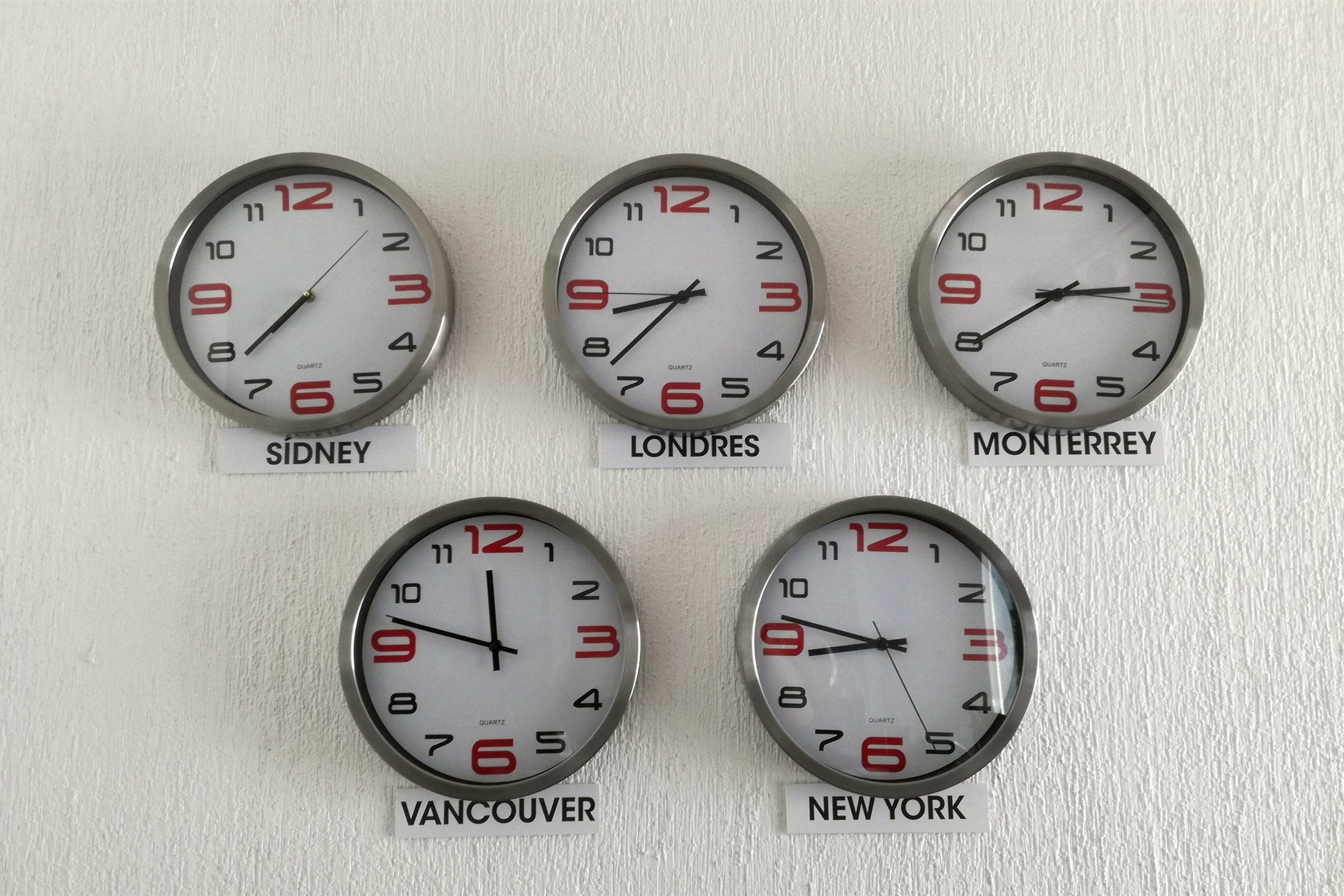
The usual explanation is geography and commerce. Canada and the United States share a long border, a very large volume of trade and the same time zones. Toronto and New York keep the same clock, and Vancouver shares a time zone with Seattle and Los Angeles. Banks in both countries are open at the same time, so confirmations and payment instructions can be agreed and processed within a single working day.
The T+2 standard grew up for pairs where the two home markets are separated by many hours, and where an extra day allowed paperwork to cross the world. That constraint never applied with the same force to the US and Canadian dollars, and the market settled on a shorter cycle for the pair long ago.
For the businesses involved, the logic is easy to see. A distributor in Ontario paying a supplier in Ohio has every reason to want the money to move quickly, and the banking systems in both countries are built to handle it.
FX T+1 and securities T+1
In 2024, Canada and the United States moved the standard settlement cycle for most equity and bond trades from two business days to one. That change was about securities markets. It did not create the USD/CAD convention, which existed long before.
The two are connected in one practical way. Investors buying US shares with Canadian dollars, or Canadian shares with US dollars, now settle the securities on T+1. Where the currency conversion is in USD/CAD, it lines up with the securities timetable. Where the conversion is in another pair, such as EUR/USD for a European investor buying US shares, the currency settles on T+2, a day after the securities. That mismatch is a matter for investment firms and their custodians and sits outside the daily concerns of most trading businesses. It is mentioned here because the two T+1 rules are often confused.
US and Canadian holidays
For USD/CAD, the value date must be a business day in both countries. A holiday in either one pushes settlement to the next day that works for both.
Some holidays fall on the same day in both countries. New Year's Day and Christmas Day are obvious examples. The first Monday of September is Labour Day in Canada and Labor Day in the United States. The second Monday of October is Thanksgiving in Canada and Columbus Day in the United States, when the Federal Reserve is closed.
Many others differ. Canada observes Good Friday, Victoria Day in May, Canada Day on 1 July and Boxing Day on 26 December. The United States observes Martin Luther King Jr. Day and Presidents' Day early in the year, Memorial Day at the end of May, Juneteenth on 19 June, Independence Day on 4 July, Veterans Day on 11 November and Thanksgiving in late November. On a day closed in either country, USD/CAD cannot settle, even though the other country's banks are open.
Because the cycle is only one day, a single holiday has a large proportional effect. A USD/CAD trade booked the day before US Thanksgiving settles the day after it, so two business days rather than one. Keep both national calendars to hand, and ask your provider to confirm the value date on any trade booked near a holiday.
A shorter funding window
T+1 gives you less time between agreeing a trade and paying for it. With a non-bank provider, you normally fund the currency you are selling before the currency you are buying is released. On a T+2 trade you have the whole of the next day to arrange the payment. On a USD/CAD trade, the funding is due the next business day.
In practice, that means:
- Your outgoing wire should be approved and released on the trade date or early on the value date.
- Your internal approvals should be in place before you book, so there is no wait for a second signatory.
- Your bank's own cut-offs matter more. If your bank releases international or high-value wires only in fixed batches, know when the last batch runs.
- Late funding is more likely to slip the onward payment to the following day.
None of this is difficult, but it catches out teams used to the more relaxed rhythm of EUR or GBP conversions.
Same-day value is sometimes possible in USD/CAD as well, because both payment systems run through the same North American working day. It depends on booking early and funding well before the relevant cut-offs. If you need it, ask before you request the quote, since a trade for value today may be priced slightly differently from the T+1 spot rate.
Practical effects for Canadian businesses
For a Canadian company paying US suppliers, T+1 is mostly good news. A conversion booked in the morning can be funded the same day and delivered to the supplier the next. That suits businesses that pay American vendors on short terms, or that convert US dollar customer receipts into Canadian dollars to meet payroll and local costs.
Canadian exporters receiving US dollars benefit in a similar way. Once the dollars arrive, a conversion to Canadian dollars can be booked and settled within a day, so funds reach the company's Canadian dollar account quickly.
Two habits help. First, keep beneficiary details for US suppliers fully set up in advance, including the bank routing details the US payment will need. Second, check the US holiday calendar as well as the Canadian one. Juneteenth and Veterans Day in particular are less familiar to Canadian teams.
Within Canada, high-value Canadian dollar payments clear through Lynx, operated by Payments Canada. In the United States, Fedwire plays a similar role for US dollars. Your provider and your bank use these systems or their correspondents behind the scenes. What matters to you is the cut-off each applies.
Practical effects for US businesses
For a US company paying Canadian suppliers or contractors, the mirror image applies. Canadian dollars can be bought and delivered within a day, which suits weekly contractor runs or short supplier terms.
US firms should watch Canadian holidays that have no US equivalent: Good Friday, Victoria Day, Canada Day and Boxing Day, as well as provincial holidays when the beneficiary's local branch may be closed even though national clearing is open. A payment to a supplier in a particular province can be credited later than expected if local staff are off for a provincial holiday.
A US subsidiary of a Canadian group funding its parent, or the reverse, can use the T+1 cycle to keep intercompany balances short. Settling intercompany charges monthly in USD/CAD, with the trade booked a day before the agreed settlement date, is a simple routine to set up.
A worked example
This example uses hypothetical rates and weekdays for illustration only.
A Vancouver manufacturer has received USD 500,000 from a customer in Washington State and needs Canadian dollars to pay staff on Friday.
- On Wednesday morning the finance manager requests a quote to sell USD 500,000 for Canadian dollars at spot.
- The quoted rate is USD/CAD 1.3700. Proceeds are 500,000 multiplied by 1.3700, which is CAD 685,000.00.
- The trade is booked with a value date of Thursday, one business day later.
- The company wires the USD 500,000 the same afternoon, quoting the trade reference.
- On Thursday the Canadian dollars are paid to the company's own CAD account, a day ahead of payroll.
Now change one fact: the trade is booked on the Wednesday before US Thanksgiving. Thursday is a US holiday, so the value date rolls to Friday. The Canadian dollars now arrive on payday itself, leaving no margin if anything goes wrong. Booking a day earlier, on Tuesday, would have restored the buffer.
If the same company had needed euros instead, the EUR/USD or EUR/CAD trade would have settled T+2, and a Wednesday booking would have produced Friday value in a normal week.
A short checklist
- Remember that USD/CAD settles T+1 and other CAD pairs settle T+2.
- Check both the US and the Canadian holiday calendars before booking.
- Have approvals ready before you request a quote.
- Know your bank's last release time for outgoing wires.
- Keep US and Canadian beneficiary details current, including routing information.
- Allow for provincial holidays when paying into a specific Canadian region.
- Tell your beneficiary the value date, not the trade date.
General information
This article is general information about USD/CAD settlement conventions. It is not investment advice and does not recommend any course of action. Rates and dates in the example are hypothetical. CCYFX is headquartered in Vancouver and handles USD/CAD spot conversions for business clients on both sides of the border. See our foreign exchange page for more.