Trade date and value date
Every foreign exchange trade carries two dates. The trade date is the day you agree the deal: the rate, the amounts and the direction are fixed. The value date, sometimes called the settlement date, is the day the two currencies are actually exchanged. On that day you deliver the currency you sold and receive the currency you bought.
The two dates are often different, and the gap between them is set by market convention. Treasurers who mix them up tend to promise a supplier payment for the day they booked the trade, then find the currency is not due to arrive for another two days. Keeping the two dates apart in your own records, your payment calendar and your conversations with suppliers avoids most of the trouble.
Shorthand helps. T stands for the trade date, and the number after it counts business days. T+0 means value on the trade date itself. T+1 means the next business day. T+2 means the second business day after the trade.
T+2 as the standard and T+1 for USD/CAD
For most currency pairs, the spot value date is T+2. If you buy euros against sterling on a Tuesday, the currencies are exchanged on Thursday. The two-day window developed when confirmations travelled by telex and payment instructions had to cross several time zones. Technology has moved on, but the convention has stayed because the whole market prices and settles around it.
The best-known exception is USD/CAD, which settles T+1. The two currencies share time zones and very close commercial ties, so the market settles a day sooner. This applies only to the pair itself. EUR/CAD and GBP/CAD follow the normal T+2 rule. Our guide to USD/CAD T+1 settlement covers that pair in more depth.
When a dealer quotes you a spot rate without saying otherwise, assume it is for the standard spot date for that pair. If you need a different date, ask for it before the quote is given.
Value today and value tomorrow
You can often trade for value earlier than spot. A trade for value on the trade date is called value today, or T+0. A trade for value on the next business day, in a pair whose spot is T+2, is called value tomorrow.
Earlier dates come with conditions. Value today is only possible while both currencies' payment systems are still open for that day, which in practice means early in the day and well before the relevant cut-offs. For pairs where one currency is settled in an Asian centre, the window for same-day value can close before European or North American businesses have even started work.
The rate for an earlier date is not always the same as spot. It is derived from the spot rate with a small adjustment that reflects the difference in interest rates between the two currencies over the days you are bringing forward. On a business-sized trade the adjustment is usually small, but it exists, so expect a quote for value today to differ slightly from the spot quote at the same moment.
Earlier value also puts more pressure on your own funding. If you book value today, the provider needs your funds today. If your bank releases wires in a morning batch and that batch has gone, the trade cannot settle as agreed.
How business days are counted
A business day for FX purposes is a day when banks are open for settlement in the financial centres of both currencies in the pair. Saturdays and Sundays are excluded in the main markets. Public holidays in either country are excluded as well.
The count runs from the trade date. For a T+2 pair traded on a Thursday, the first business day after the trade is Friday and the second is Monday, so spot is Monday. For a trade on a Friday, spot is the following Tuesday. Weekends simply do not count.
Some countries use a different working week from Europe and North America, and some markets have days that are open for trading but closed for settlement. If you deal in less common currencies, ask your provider for the settlement calendar rather than assuming a Monday to Friday week.
Holidays and how they move the date
A holiday in either currency's settlement centre stops that day from being a value date. When the calculated spot date lands on a holiday, it rolls forward to the next day that is a business day for both currencies.
The euro has its own settlement calendar. The euro area's large-value payment system closes on New Year's Day, Good Friday, Easter Monday, 1 May, Christmas Day and 26 December. National holidays in individual euro countries do not, on their own, stop euro settlement, though a local bank in that country may be shut.
Other currencies follow national holidays. Canada has days such as Victoria Day and Canada Day. Hong Kong observes Lunar New Year, the Ching Ming Festival and the Chung Yeung Festival, among others. Poland closes for days including 3 May and 11 November. Each of these can push a value date.
Holidays also affect the days in between. If a T+2 trade is booked the day before a holiday in one of the two currencies, the count skips the holiday, so value can land three or four calendar days after the trade. Long holiday periods, such as Easter in Europe or Lunar New Year in Hong Kong, can stretch settlement by most of a week.
A practical habit is to load the holiday calendars of every currency you use into your treasury diary at the start of the year. Review them again before quarter end, when a missed holiday hurts most.
Cut-off times
A cut-off time is the latest point in the day at which a payment can be processed for value that day. Each currency has its own, set by its clearing system and then brought forward by each bank in the chain to allow time for processing. Your provider will have cut-offs for receiving your funds and for sending payments out.
Cut-offs interact with value dates in a simple way. If your funds for a trade arrive after the provider's cut-off on the value date, the exchange cannot complete that day. The outgoing payment slips to the next business day, and your beneficiary receives the money later than planned.
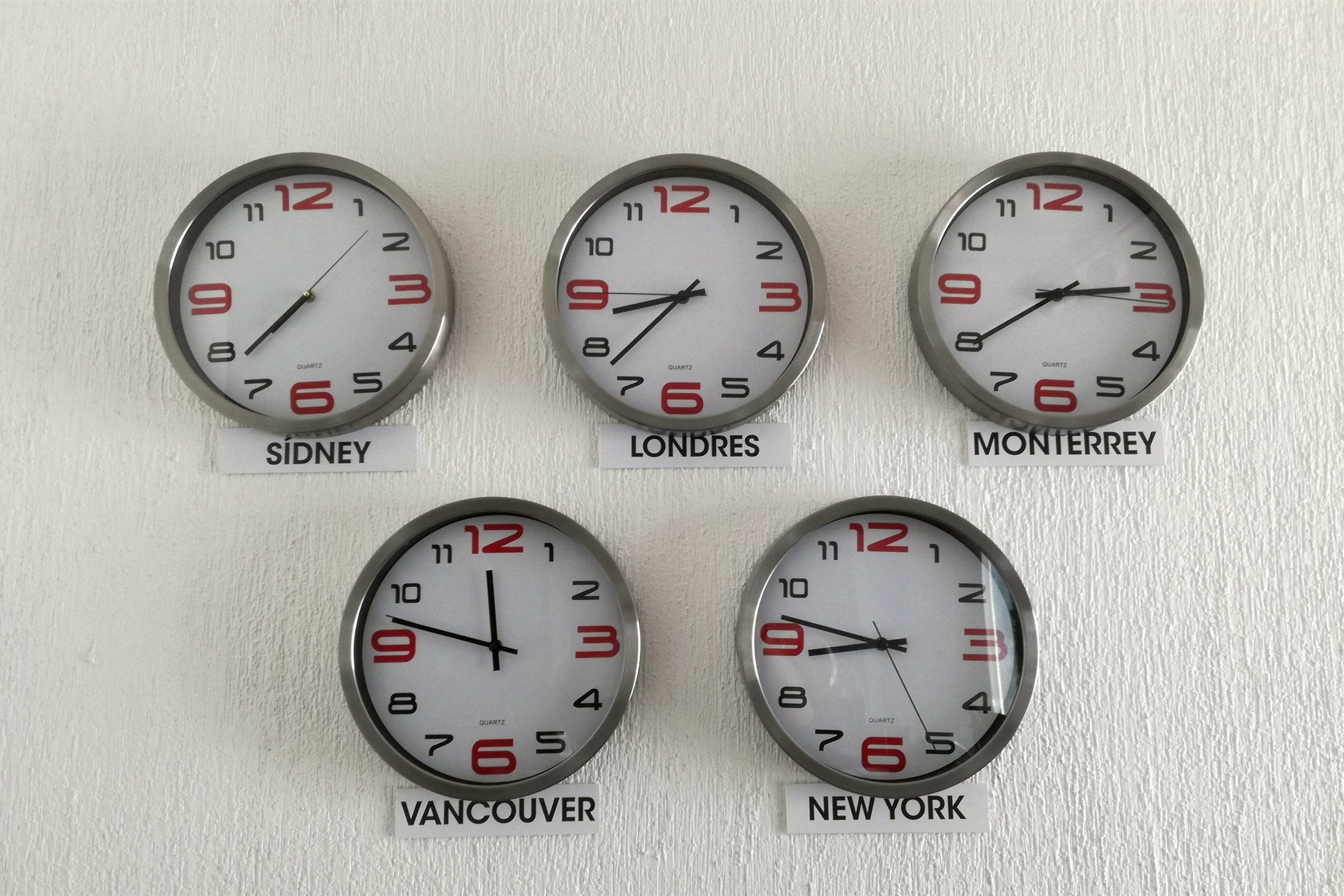
Time zones matter here. A Vancouver company buying Hong Kong dollars is dealing with a currency whose local banking day ends while Vancouver is asleep. Paying in Asian currencies from North America often means acting the afternoon before, local time, to meet the next day's cut-off in Asia. Ask your provider for the cut-offs that apply to the currencies you use, and keep a copy where the payments team can see it.
When a currency's market is closed
A holiday in one country does not stop the global FX market. Dealers in London, Hong Kong or Toronto still quote rates for a currency whose home market is closed, so you can usually agree a trade on that day. What you cannot do is settle the currency on that day, because its domestic clearing system is shut.
In practice this has three effects. First, the value date for any trade involving the closed currency skips the holiday. Second, liquidity in that currency is thinner while its home centre is closed, so spreads tend to be wider and you may receive a less favourable rate than on a normal day. Third, payments in that currency queue until the market reopens, which can create a backlog on the first day back.
Unplanned closures happen too. Severe weather, system outages or official announcements can shut a market at short notice. When that happens, trades already booked for that value date are normally moved to the next good business day. A provider should tell you promptly if a trade of yours is affected.
A worked holiday example
This example uses hypothetical dates described by weekday. It is for illustration only.
A Polish subsidiary of a European group needs zloty for payroll. The group treasurer books EUR/PLN for spot on a Wednesday. The following Friday is a public holiday in Poland.
| Day | EUR open | PLN open | Counts as business day |
|---|---|---|---|
| Wednesday (trade date) | Yes | Yes | Trade date, T |
| Thursday | Yes | Yes | T+1 |
| Friday | Yes | No | No, skipped |
| Saturday and Sunday | No | No | No, skipped |
| Monday | Yes | Yes | T+2, the value date |
Without the holiday, value would have been Friday. With it, the zloty arrive on Monday. If the payroll provider needs funds on Friday to pay salaries that day, the trade should have been booked a day or two earlier, or for an earlier value date while the window was open. The treasurer who checks the calendar on Monday of that week avoids a difficult call with the payroll team on Friday.
Planning payments around value dates
Good value date management is mostly routine. A few habits cover nearly every case.
- Work backwards from the date the beneficiary needs the money, then subtract the receiving bank's processing time, the spot convention and any holidays.
- Keep a single calendar with the holidays of every currency you pay or receive.
- Book trades for regular obligations, such as payroll or rent, a fixed number of business days ahead of the due date.
- Agree internal approval deadlines that sit comfortably before your provider's cut-offs.
- Tell suppliers the value date, not the trade date, when you confirm a payment.
- After a holiday, check that queued payments have actually been released.
None of this needs specialist software. A shared spreadsheet and a disciplined weekly check do the job for most mid-sized businesses.
General information
This article is general information about FX value dates and settlement conventions. It is not investment advice and does not recommend any course of action for your business. Holiday calendars and cut-off times change, so confirm the dates that apply to each trade with your provider. CCYFX shows the value date on every quote and confirms it in writing after booking. See our foreign exchange page for how we handle spot conversions.